Rain Sounds
Can Rain Sounds Help You Sleep?
Rain sounds may help some people settle at bedtime because a fairly continuous texture can make small background disturbances less noticeable and give them something undemanding to hear. Other people find individual drops distracting or prefer silence. Neither reaction is unusual. The useful question is not whether rain has a special sleep frequency, but whether a particular recording makes your own evening feel easier. Start with its texture, its changes in loudness, and the room where you will actually listen.

A steady backdrop can soften everyday distractions
In a quiet room, a distant conversation or a passing car can stand out. Adding a steady sound may reduce the contrast between those interruptions and the background. This is sound masking: the original disturbance still exists, but you may notice it less. It is not the same as noise cancellation, and it will not reliably hide every sound.
Rain is one possible backdrop, especially when the recording has few obvious gaps. If the rainfall rises and falls sharply, its own changes might draw your attention instead. Compare a fairly even rain texture with white noise if covering everyday interruptions is your main goal.
Rain is a texture, not one fixed sound
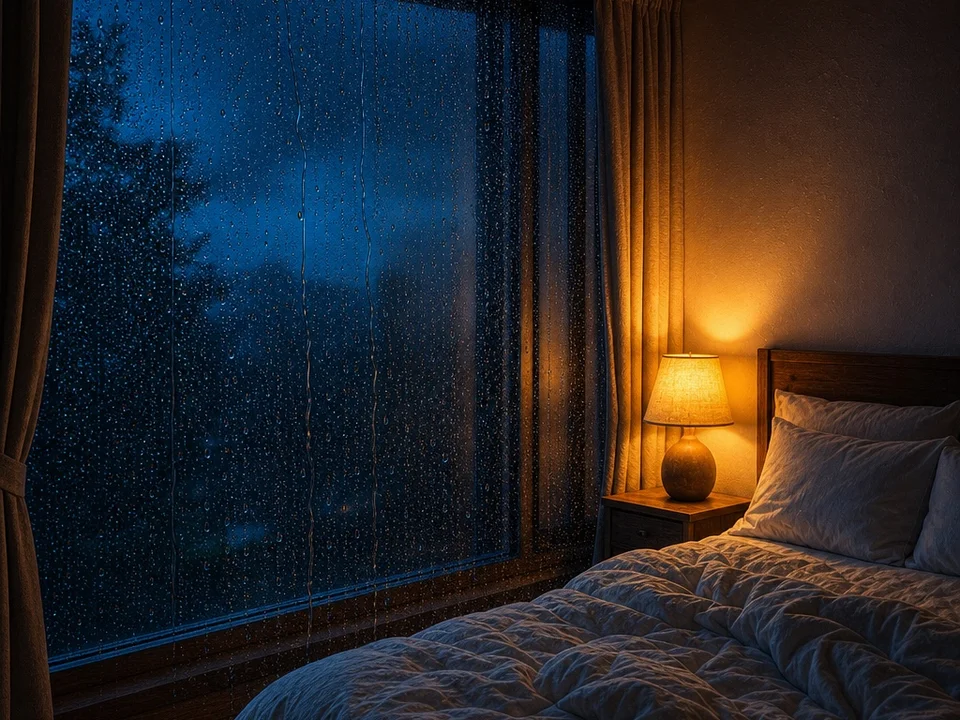
Rain on a window can have distinct little taps. Rain falling through leaves may sound diffuse and rustling. A downpour can form a dense wash, while a sparse shower leaves space between drops. These descriptions are starting points, not guarantees: microphone position and recording choices change what reaches your ears.
Listen for the detail you keep returning to. A bright drip that sounds charming during a daytime preview might become the loudest thing in your attention at bedtime. Conversely, a broad wash may feel too featureless. Pick the texture that asks the least of you, rather than the one with the most appealing title.
Your associations matter
Rain may remind you of reading indoors or resting somewhere sheltered. It may also bring to mind a noisy roof, an inconvenient commute, or a storm you disliked. A recording cannot choose those associations for you. Notice whether the scene feels welcoming before deciding that rain belongs in your routine.
A familiar selection can also become part of the sequence of putting things away and ending the day. Treat that as a personal habit you can build, not proof that rainfall triggers a particular sleep stage. There is no need to imagine a peaceful scene if the actual sound does not appeal to you.
Check the recording before lights out
Preview a recording while you are still choosing, then stop browsing once you settle in. Hear enough to catch changes beyond its opening seconds. For a longer selection, check later passages too; a gentle opening does not tell you whether thunder or a louder section appears further along.
- Notice sudden thunder, isolated drips, voices, or other details that pull you back into listening.
- If playback repeats, check whether the restart creates a noticeable jump or pause.
- Compare on the speaker you plan to use, from your normal resting position.
Use the least volume that feels useful
Begin with the volume low and increase it only enough to make the background comfortable. You do not need to reproduce a real storm in your bedroom. If covering a disturbance requires increasingly loud playback, first consider whether you can reduce the disturbance itself or reposition your speaker.
The US National Institute on Deafness and Other Communication Disorders explains that hearing risk depends on both sound level and exposure time. A phone's volume percentage is not a universal safety measure. Keep essential alarms audible, and turn playback down or off if it feels intrusive or causes discomfort.
Compare evenings without turning sleep into a test
Try rain on a few otherwise ordinary evenings. Keep your listening setup similar, and make a brief note the next morning: was the texture pleasant, did you keep adjusting it, and did anything about it bother you? Avoid repeatedly checking the clock to calculate how quickly you fell asleep.
Include a quiet evening in the comparison if your room allows it. A busy day, late coffee, or an unfamiliar bedroom can change your experience, so one good night cannot establish that rain caused better sleep. If you like natural sound but dislike dense rainfall, compare it with gentler ocean movement or a stream.
Let rain fit around a simpler bedtime
The National Heart, Lung, and Blood Institute recommends a consistent sleep schedule, quiet time before bed, and a quiet, cool, dark bedroom. The sources cited here provide general sleep and hearing guidance, rather than direct evidence that rain recordings improve sleep. Audio is an optional addition when it makes your surroundings more comfortable.
Choose your sound before you get into bed, finish other phone tasks, and let the evening become less busy. If rain keeps you alert, stop using it. Persistent difficulty sleeping deserves a conversation with a healthcare professional rather than an endless search for a stronger or more elaborate recording.